BeBack crossing catheter
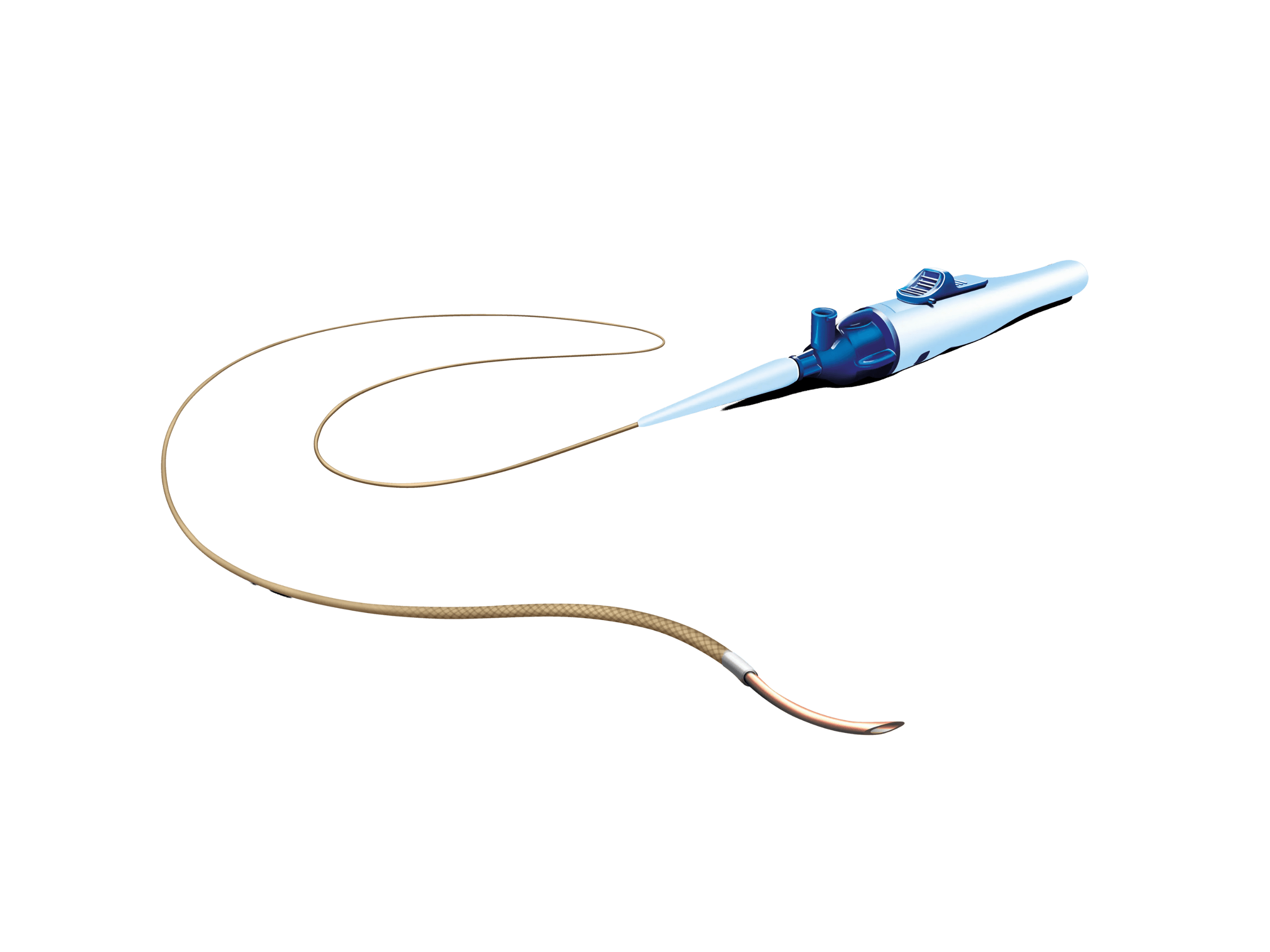
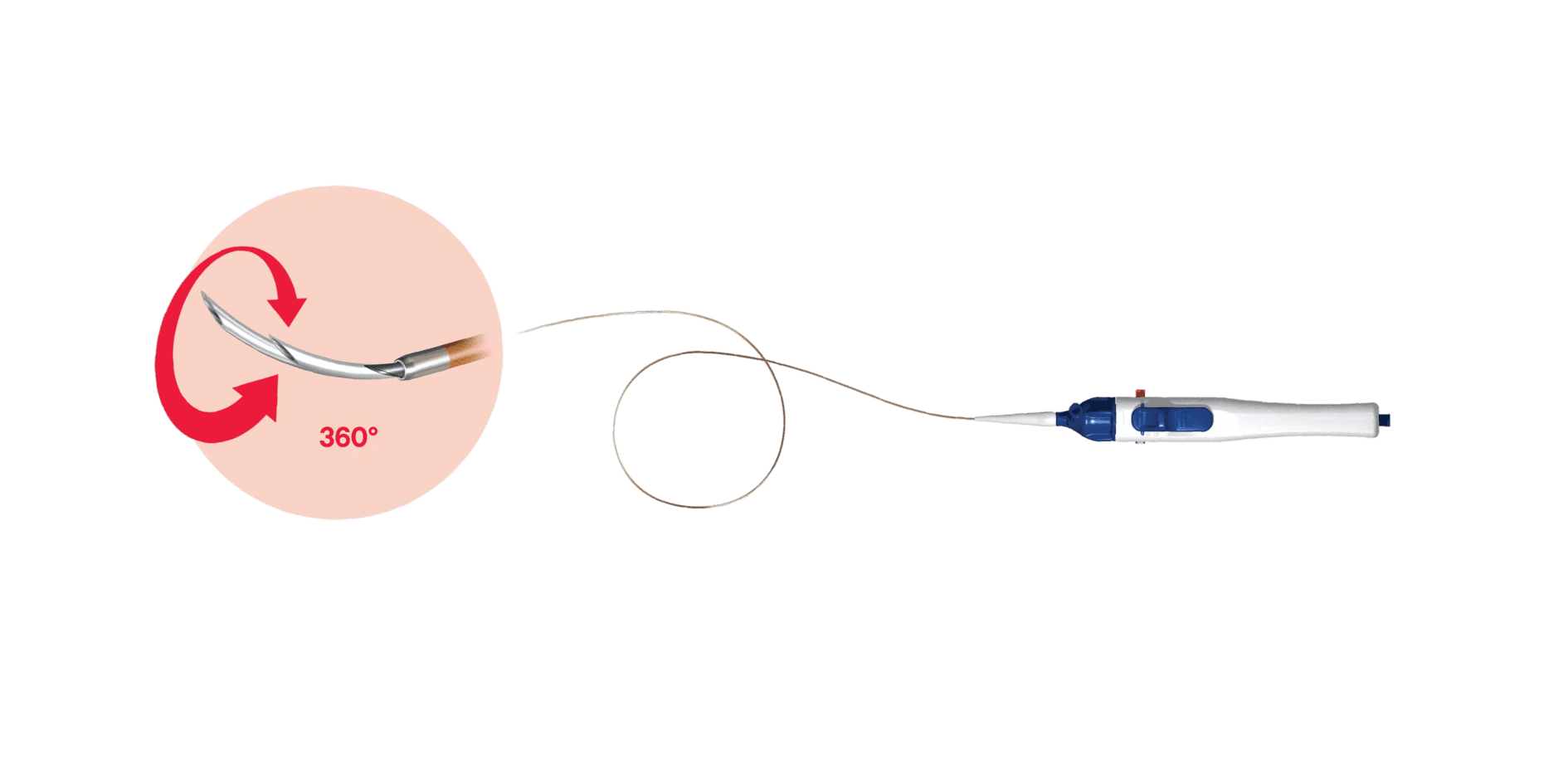
Cross chronic total occlusions with success. The BeBack crossing catheter is a low profile support catheter that has a crossing and targeted re-entry capability with a length-adjustable and 360° rotational Nitinol needle. The c-shaped radiopaque marker indicates in which direction the curved needle protrudes from the tip of the catheter.
Learn more
for retrograde, antegrade, and crossover approach
for support, crossing, and re-entry
in adjustable length, and direction
Indication
The BeBack crossing catheter is to be used in conjunction with a steerable guidewire to access discrete regions of the peripheral vasculature. It may be used to facilitate placement and exchange of guidewires.
Downloads
Visit the Cook Medical (distributor) website for more information.
Technical specifications
BeBack crossing catheter 2.9 F
Introducer sheath compatibility
2.9 F |
5 F for crossover |
Guide wire
0.014"
Needle lengths
3 mm (straight) |
7 mm (curved) |
Needle profile
23.8 gauge
Rotation
360°
Catheter lengths
80 & 120 cm
Needle material
Nickel-Titanium alloy (Nitinol)
Marker
Radiopaque c-shaped marker, opening of the C indicates needle direction
BeBack crossing catheter 4 F
Introducer sheath compatibility
4 F |
6 F for crossover |
Guide wire
0.018"
Needle lengths
3 mm (straight) |
7 mm (curved) |
11 mm (curved) |
Needle profile
21.5 gauge
Rotation
360°
Catheter lengths
80 & 120 cm
Needle material
Nickel-Titanium alloy (Nitinol)
Marker
Radiopaque c-shaped marker, opening of the C indicates needle direction
Ordering information
Catheter Length | |
|---|---|
80 cm |
Introducer Sheath Size | Catheter Length | |
|---|---|---|
2.9 F | 80 cm | |
2.9 F | 120 cm | |
4.0 F | 80 cm | |
4.0 F | 120 cm |

Get in Touch With
Caution: Federal law (USA) restricts this device to sale by or on the order of a physician.
Indications: The purpose and intended use of the Bentley InnoMed GmbH BeBack Crossing Catheter is to be used in conjunction with a steerable guidewire to access discrete regions of the peripheral vasculature. It may be used to facilitate placement and exchange of guidewires.
Contraindication: Contraindicated for use in the coronary, cerebral and carotid arteries.
Warning: This device is intended for one-use only. Do not resterilize or reuse.
Precautions: This catheter should only be used by physicians trained in peripheral percutaneous interventional techniques in a fully equipped catheterization laboratory. The sealed catheter container should be inspected prior to opening. If the seal is broken, or the container has been damaged, sterility cannot be assured.
Potential Complications: Potential adverse events include, but are not limited to vessel dissection, injury, pseudoaneurysm, hemorrhage, and ischemia. Potential complications related to percutaneous transluminal angioplasty include, but are not limited to clot formation and embolism, nerve damage, vascular perforation requiring surgical repair, damage to the vascular intima, or death. Potential complications related to introducing the catheter into the body include, but are not limited to infection, hematoma formation, and air embolism.
Other: Contents of unopened and undamaged package are sterile and non pyrogenic. Store at room temperature in a dry, dark area away from heat and chemical fluids. Shelf life: The recommended shelf life is printed on each package. Storage beyond the expiration date may result in catheter deterioration.
Refer to the Instructions for Use for a complete description of all applicable indications, warnings, precautions/ cautions and contraindications.
#405145-001/002 – 12/2023